Uniden BCD396XT · Volume 2
Uniden BCD396XT — Vol 2: Operations
P25 Phase I DynamicDMA handheld
2.1 Operating modes
The 396XT covers the Uniden mid-tier digital-scanner feature set as of its 2009 introduction. The notable omissions vs the SDS100 generation: no P25 Phase II, no DMR, no NXDN, no ProVoice, no True I/Q receiver — and no upgrade adds any of them.
Conventional analog modes.
- FM — narrowband (12.5 kHz spaced) and standard (25 kHz) — the workhorse for VHF/UHF business band, public-safety analog repeaters, and amateur 2 m / 70 cm.
- AM — for the aircraft band (118-137 MHz civil aviation), CB (27 MHz), and the military 225-380 MHz milair band (subject to the §15.121 carve-outs).
- NFM — explicitly narrow FM (typically 11 kHz deviation) for newer narrowband-mandated business-band channels.
- WFM — wideband FM for the broadcast FM band (88-108 MHz) — included for completeness; few people scan broadcast FM but the option is there.
Trunked digital and analog modes.
- Motorola Type I and Type II (800, 900, UHF, and VHF, including rebanded 800 MHz systems) — the legacy analog Motorola trunking family. Mostly historical now; some legacy public-safety still runs it.
- EDACS Wide / Narrow / SCAT — Ericsson / GE / Harris trunking with analog voice. The 396XT does not decode EDACS ProVoice (Uniden lists “EDACS ESK (No ProVoice Decoding)”), and no upgrade adds it; for ProVoice systems, a BCD436HP/BCD536HP or SDS-series scanner with a paid key is the option.
- LTR Standard — Logic Trunked Radio. A simpler trunking protocol than the Motorola or EDACS families; common in commercial fleet operations (taxis, towing, utility companies).
- P25 Phase I (FDMA) — APCO Project 25 single-time-slot, conventional and trunked, plus P25 one-frequency trunking. The dominant public-safety voice format of the 396XT’s era.
- P25 Phase II (TDMA) — not supported. Two-slot TDMA doubles spectrum efficiency and is now the dominant flavor of P25 in major public-safety systems. The 396XT never decoded it, no firmware release added it, and no upgrade exists — a system that has migrated to Phase II is silent on this scanner.
- X2-TDMA — not supported. Motorola’s pre-standard TDMA precursor to P25 Phase II is not among Uniden’s listed 396XT system types.
Digital voice decoding. P25 voice is decoded in the radio; audio on a clean signal is clear, while weak or fading signals bring the characteristic “warbling” artifacts before audio drops out. Firmware 1.10.00 added an adjustable P25 decode threshold, and 1.11.01 improved decoding on simulcast (LSM) sites — two good reasons to run the final firmware (see Vol 5 — Upgrades & Firmware).
No Phase II, no DMR, no NXDN. Worth restating because it is the single most common reason an operator outgrows the 396XT: it cannot decode P25 Phase II, DMR (Mototrbo, Hytera, amateur DMR, public-safety DMR migration deployments) or NXDN (Kenwood NEXEDGE, Icom IDAS, public-safety NXDN). For those modes, the SDS100 or BCDx36HP-class radios are necessary. As of 2026, public-safety DMR is still modest in most US regions, but most major P25 systems have moved to Phase II, which the 396XT cannot hear — check your local systems on RadioReference before relying on it. In regions where the local utility or transit DMR network is the active monitoring target, the 396XT is a non-starter.
Simulcast (LSM) sites. Linear Simulcast Modulation is a P25 transmission variant used in dense multi-site simulcast networks. The 396XT’s final firmware (1.11.01) specifically improved performance on LSM sites, but in a metro area with a multi-site simulcast network it can still suffer distortion or dropouts that the SDS100’s True I/Q receiver handles cleanly. On single-transmitter sites no LSM effects appear.
Search, Close Call, and Band Scope. The 396XT has Uniden’s Service Search (pre-populated public-safety / aviation / marine / amateur / business ranges), Custom Search, Close Call capture (with a temporary store of the last 10 hits), Band Scope mode (a real-time graph of signal level across a range), and fire tone-out alerts. It does not have the SDS100’s Discovery mode, which logs new activity to an SD card.
2.2 Field use
Antenna pairing. The stock 75 mm wideband rubber duck is fine for in-pocket carry but loses 6-10 dB vs any of the popular wideband whip upgrades — significant in a marginal-signal scenario. Three recommendations from the antenna deep dive:
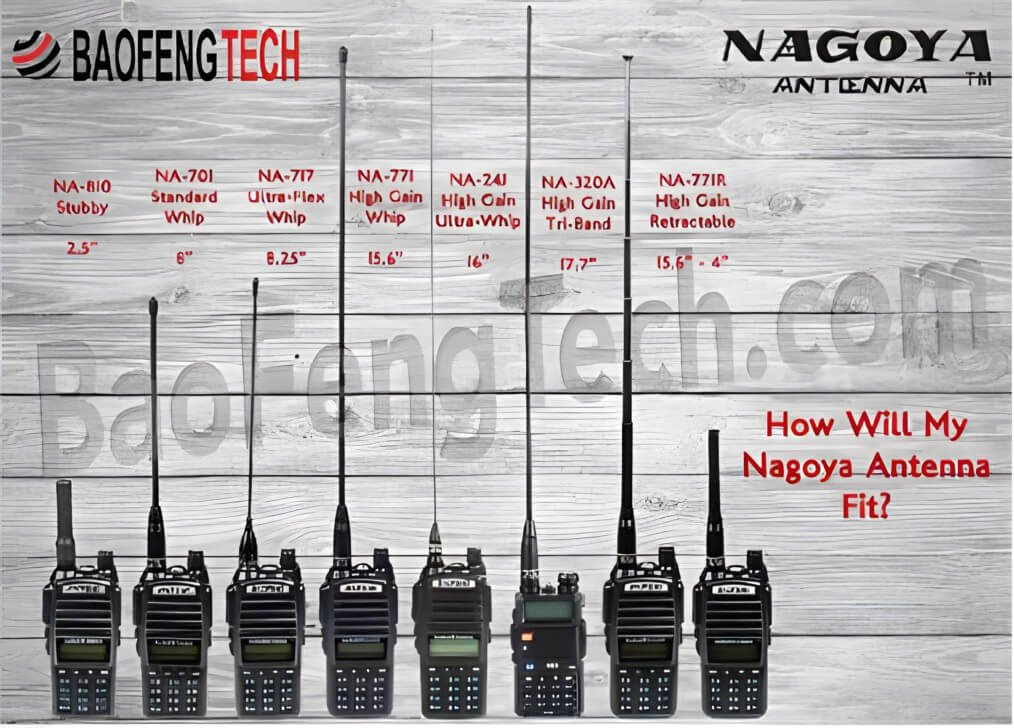
- Nagoya NA-771 or equivalent ~390 mm dual-band whip — the budget upgrade ($20-25 USD mid-2026). Optimized for 2 m / 70 cm amateur work but performs acceptably across the full scanner range with the SWR mismatch hidden by the radio’s input matching. See Antennas Vol 9 (Portable & Mobile Monopoles) for the geometry and the budget-vs-premium decision.
- Diamond RH-771 or Smiley 270 — premium dual-band whips, ~$45-60 USD; mechanically tougher and slightly better-tuned across the broad scanner range. Recommended for any operator who carries the radio outdoors regularly.
- Outdoor discone (Diamond D-130J, Comet DS-150S) — when the 396XT is base-station deployed (cradle on the desk, USB power, SMA-to-N pigtail to a roof-mounted discone). See Antennas Vol 12 (Discone & Wideband Antennas) for the discone geometry and frequency-coverage tradeoffs; Antennas Vol 29 (Use-case Matrix) has explicit per-radio antenna recommendations including the 396XT.
The antenna-pairing logic for a wideband scanner is asymmetric: a discone outperforms a single-band optimized antenna because the scanner’s listening band is the full 25-1300 MHz range, not any single narrow slice. The mediocre-across-all-bands tradeoff of the discone is exactly the right tradeoff for the scanner posture.
Posture. The 396XT is the second-pocket scanner in the field — SDS100 in one pocket as the primary, 396XT in the other as the long-running backup when the SDS100 battery is depleting. With 3× eneloop AA and the backlight tuned down, the 396XT runs 6-8 hours of typical-duty scanning; the SDS100 runs 8-12 hours but recharges from a USB power bank on its mini-USB port, whereas the 396XT recharges by simply swapping in another set of charged AA cells from a pouch. The asymmetry favors the 396XT for sustained multi-day deployments where USB power is not assured.
Charging. The 396XT charges installed Ni-MH cells only from its AC adapter (6 V DC, 800 mA), with the battery-type switch set to Ni-MH and the scanner turned off — it does not charge over USB. The charge time is set in the menu. For faster turnaround, swap to externally charged eneloops; an external smart charger (La Crosse BC-1000 or equivalent) cycles a fresh set in 1-2 hours.
RF environment considerations. In a dense urban RF environment the 396XT’s narrowband superhet front-end can be desensitized by strong nearby signals — broadcast FM (88-108 MHz at potentially +20 to +40 dBm at close range from a tall tower), cellular base stations (700-900 MHz, 1700-2100 MHz), and pager transmitters can all couple through the antenna and reduce the radio’s sensitivity on the target band. The SDS100’s filtered front-end handles this slightly better. The mitigation is an antenna with frequency-selective response (discone is broad but doesn’t peak at the offending bands) or, in extreme cases, an external bandpass preselector — though the latter is rarely worth the complexity for casual scanning.
Cross-reference to amateur use. An FCC Amateur Extra-class license is held on this station — the 396XT can monitor amateur 2 m (144-148 MHz) and 70 cm (420-450 MHz) FM repeaters and simplex channels in the routine scanning workflow. This is purely receive — the 396XT cannot transmit. For amateur TX, see Vol 5 (VX-8DR), Vol 6 (Baofeng F8HP), or Vol 8 (AnyTone D878UVII). The 396XT is a useful monitor-while-operating tool — leave it on a local repeater’s TG list while transmitting from the AnyTone on the same band; the duplex separation means the 396XT receives normally while the TX radio is keyed.
Comments (0)